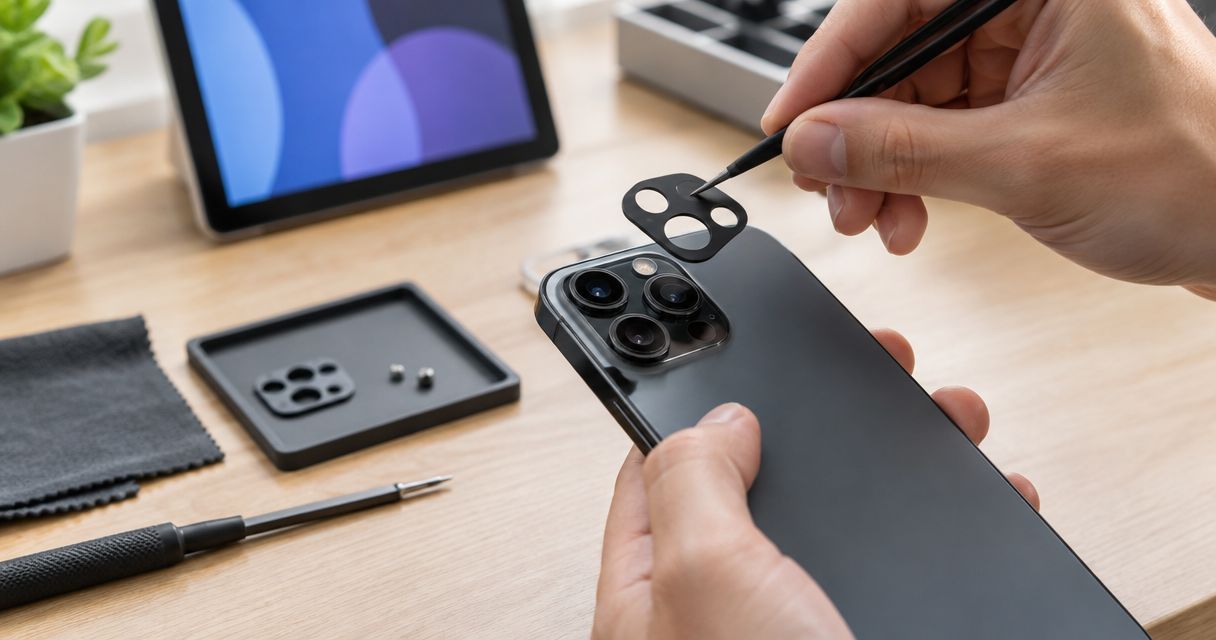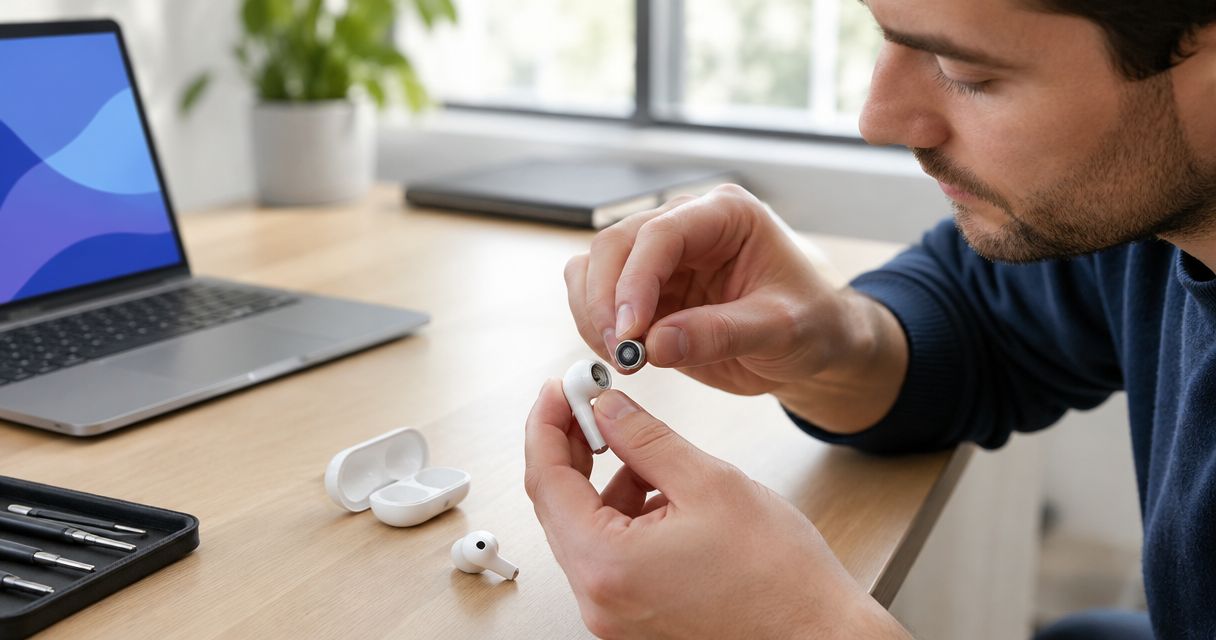
Yes, an earpiece speaker can be fixed separately from the main loudspeaker when the fault is limited to the earpiece and the phone’s design allows that repair. The catch is that some phones attach the earpiece to a larger assembly, so a separate sound problem does not always mean a separate replacement part. Inspection determines whether you need cleaning, an earpiece replacement, or work on a connection or shared audio circuit.
- Can an earpiece speaker be fixed separately? Yes, when the phone’s design and diagnosed fault allow it.
- A working loudspeaker does not prove the earpiece itself has failed; settings, blockage, and connections need checking.
- Replace only the confirmed faulty component or required assembly, not both speakers automatically.
- Aspect Phone Solutions offers appointment-based smartphone repair for Edmond and Oklahoma City customers.
Can an earpiece speaker be fixed separately from the main speaker?
Yes. A faulty earpiece does not automatically require replacing the main speaker. The earpiece produces sound near your ear during ordinary calls. The main loudspeaker handles louder playback, including speakerphone audio; exact routing depends on the phone.
On phones with stereo playback, the earpiece can also contribute to music and video sound. That overlap does not make the speakers interchangeable or mean they must be replaced together.
For a repair decision in 2026, identify the failed component before authorizing replacement. You can review the phone repair services before arranging an inspection.
| Repair approach | Best for | Advantage | Limitation |
|---|---|---|---|
| Earpiece cleaning | Sound reduced by a confirmed external blockage | Keeps a working speaker in place | Does not repair internal damage |
| Separate earpiece replacement | A confirmed failed receiver that is separately serviceable | Targets the faulty component | Depends on the phone’s construction |
| Assembly repair or replacement | An earpiece attached to a larger required assembly | Addresses the assembly involved in the fault | Involves more than the speaker alone |
| Connection or circuit repair | A fault outside the speaker itself | Addresses the actual source of lost audio | Requires diagnosis beyond a speaker swap |
These are repair paths, not a diagnosis you can make from quiet calls alone. Ask which finding supports the proposed work and whether the main loudspeaker tested normally.
Why this matters
If you can hear calls only on speakerphone, replacing every audio component is not a sound starting point. The useful question is where the call audio stops working: at the sound opening, the receiver, a connection, or somewhere earlier in the audio path.
A targeted diagnosis also prevents the opposite mistake: insisting on an earpiece replacement when the receiver is working. A blocked opening or incorrect audio output can produce a similar complaint without requiring a new speaker.
For Edmond and OKC customers arranging repair in 2026, describe the symptom rather than ordering a part. Tell the technician what you hear, which audio modes work, and whether the problem followed a drop, moisture exposure, or earlier repair.
When a separate earpiece repair makes sense
A separate earpiece repair makes sense when testing identifies the receiver as faulty and the device allows it to be serviced independently. A working main speaker supports a narrower investigation, but it does not identify the failed part by itself.
Best for: a confirmed receiver fault with no reason to replace the main loudspeaker. The advantage is a repair focused on the failed component. The limitation is that access, attached components, and the phone’s condition still determine the work required.
Ask the technician to distinguish between replacing the receiver and replacing an assembly that includes the receiver. Both can address an earpiece problem without replacing the main speaker, but they are different repair scopes.
Afterward, test ordinary call audio as well as speakerphone. If the earpiece also contributes to media playback on your phone, include that function in the final check.
When the earpiece belongs to a larger assembly
Some phone designs place the earpiece alongside other components on a shared assembly. Depending on the model and damage, the appropriate repair involves that assembly rather than an isolated speaker replacement.
Best for: a diagnosed fault that cannot be resolved by servicing the receiver alone. An assembly repair addresses the construction of the device. Its drawback is a broader scope than the small speaker you hear during calls.
Ask what the assembly contains and which functions require testing afterward. If nearby sensors or other front-facing components are involved, the repair explanation should identify them in plain language.
An earpiece complaint alone does not establish that the screen needs replacement. If a screen or larger assembly is included in the recommendation, ask whether it is damaged, required by the construction, or involved for another specific reason.
When cleaning or another correction is the better answer
A muffled earpiece is not necessarily broken. Debris at the sound opening, a misplaced screen protector, or a case covering the opening can reduce what reaches your ear.
Best for: a confirmed obstruction or audio-routing problem with a working receiver. Correcting the cause avoids replacing a functional part. The limitation is that clearing an obstruction will not restore a damaged speaker or failed connection.
Do not push a pin through the mesh, pour liquid into the opening, or blast it with compressed air. Those methods can damage the protective material or push contamination farther inside. Limit home checks to examining the opening and removing an accessory that clearly covers it.
If the sound stays distorted or silent, stop treating the problem as dirt. Inspection is the next step, especially after impact or liquid exposure.
Why separate earpiece repair varies
The answer in 2026 remains model-specific because phones do not all use the same speaker layout or repair method. These factors determine whether the earpiece can be addressed on its own:
- Phone construction: The receiver’s mounting and attachment determine whether it is independently serviceable or part of a larger assembly.
- Confirmed failure: A damaged receiver, blocked opening, loose connection, and circuit fault require different remedies.
- Impact damage: A drop can affect the speaker, its connection, or surrounding structure. Replacing the receiver alone does not correct unrelated damage.
- Liquid exposure: Corrosion can affect more than the visible sound opening, so the inspection must look beyond a muffled speaker.
- Previous repairs: Earlier work near the display or receiver is relevant history, particularly when the symptom began immediately afterward.
- Other symptoms: Problems with speakerphone, microphones, or nearby sensors change what needs testing before a repair is approved.
None of these factors proves that both speakers need replacement. They explain why the technician needs the exact phone model and a repeatable description of the fault.
How to check the symptoms before your appointment
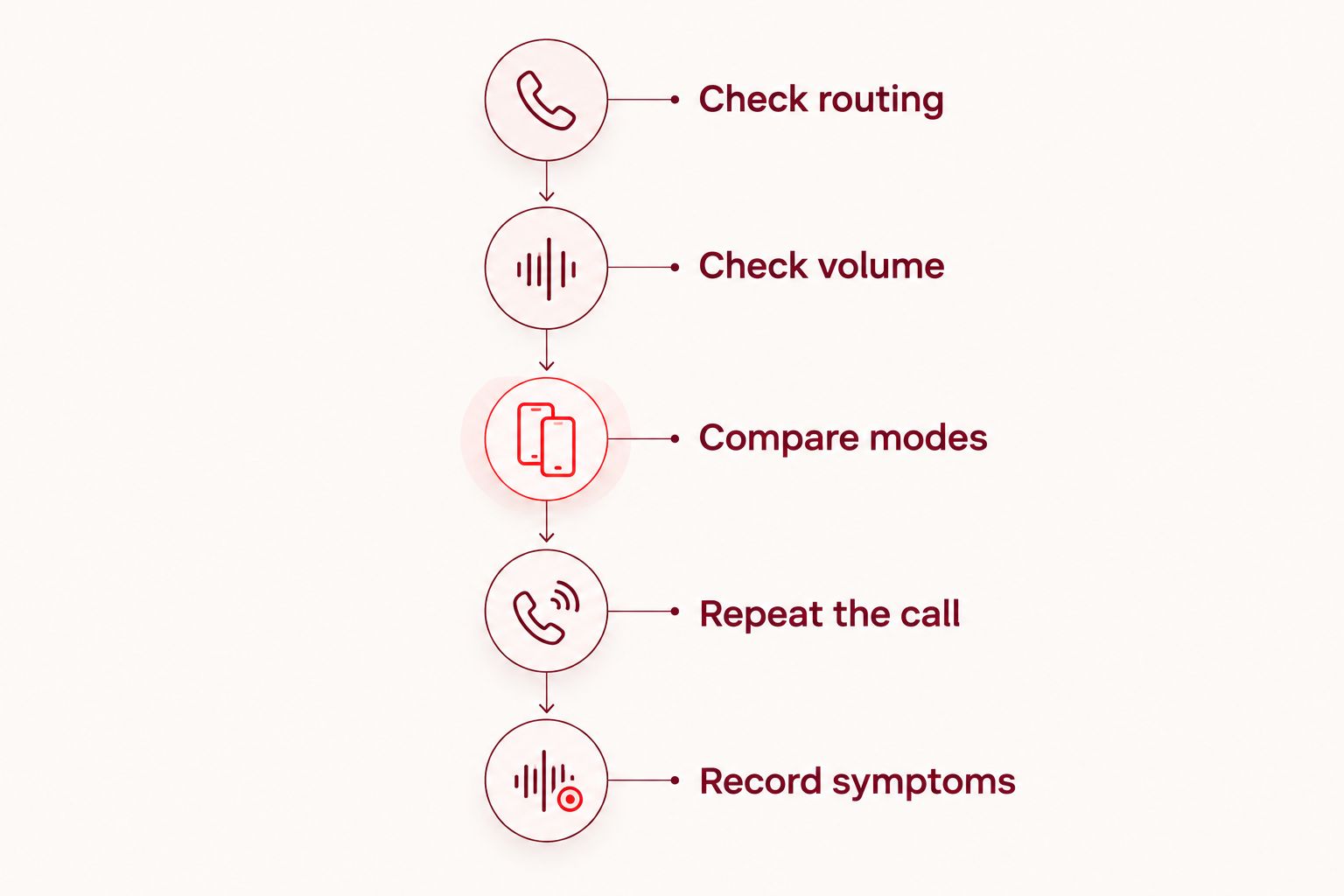
Use this sequence to gather useful information, not to open the phone or confirm a failed part. Keep the volume comfortable and change only one condition at a time.
- Check routing. Disconnect headphones and Bluetooth audio accessories. During a call, confirm that sound is directed to the phone rather than another device.
- Check volume. Adjust volume while the call is active. Call volume and media volume are not necessarily controlled together.
- Compare modes. Switch between ordinary call audio and speakerphone. Note whether the difference is silence, low volume, crackling, or distortion.
- Repeat the call. Try another caller or a different calling app. A problem limited to a particular call does not establish a hardware fault.
- Record symptoms. Write down what works, what fails, and when the issue started. Include any recent drop, moisture exposure, or repair.
These checks give the technician a symptom to reproduce. They do not require a factory reset, disassembly, or an attempt to clean inside the phone.
What should you authorize after inspection?
Authorize the diagnosed repair, not an automatic replacement of both speakers. Ask what failed, how it was identified, and whether the proposed work involves the receiver alone or a larger assembly.
Before approving work in 2026, make sure the explanation answers these questions:
- Does the main loudspeaker work correctly?
- Is the earpiece itself faulty, or is the problem elsewhere?
- What part or assembly requires attention?
- Which functions will be checked after repair?
- What remains unresolved if this repair is completed?
Aspect Phone Solutions is best for Edmond and OKC customers seeking appointment-based smartphone repair. The appointment requirement means you should arrange your visit rather than expect walk-in service, and prices are confirmed before authorization.
Use the booking page to arrange an appointment. Describe the problem as precisely as you can—for example, clear speakerphone audio but quiet ordinary calls—without assuming which part needs replacement.
Arrange an earpiece repair appointment
Schedule an inspection for your call-audio problem. Prices are confirmed before authorization.
Can speakerphone work while the earpiece is broken?
Yes, speakerphone can work while the earpiece is broken because the phone uses different sound outputs for those listening modes. That contrast helps narrow the investigation, but it does not rule out a blocked opening, routing issue, or connection fault.
Tell the technician whether speakerphone sounds clear throughout the call. If it also cuts out or distorts, include that information rather than describing the problem as earpiece-only.
Does a quiet earpiece always need replacement?
No, a quiet earpiece does not always need replacement. Call volume, an obstructed opening, an accessory covering the sound outlet, or an audio-routing issue should be checked before condemning the receiver.
If those checks do not explain the symptom, inspection determines the next move. Repeatedly increasing volume does not identify why the sound is weak.
Can I keep using speakerphone until the repair?
Speakerphone is a temporary workaround when it works normally and the phone has no other safety concerns. It is less private than using the earpiece, so avoid sensitive calls where other people can hear.
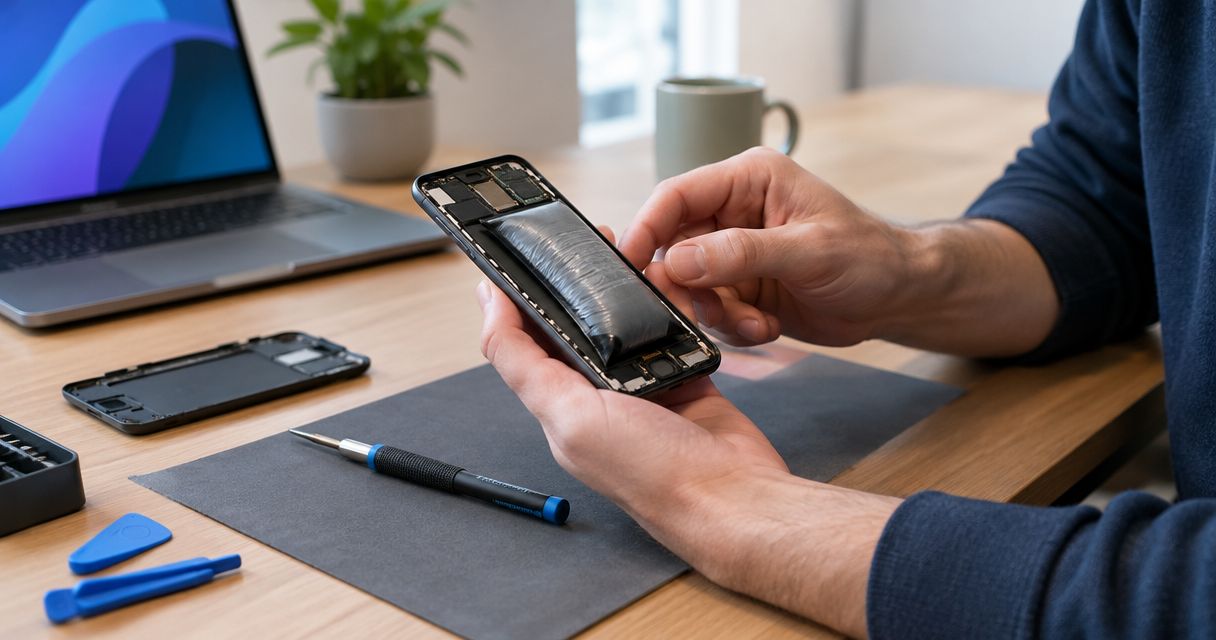
Do not treat working speakerphone as proof that a wet, overheating, or physically damaged phone is safe. Stop using a phone showing signs of battery swelling or unusual heat and seek professional guidance.
FAQ
Can an earpiece speaker be fixed separately on every phone?
No, separate earpiece repair is not possible in the same way on every phone. The model’s construction and the diagnosed fault determine whether the receiver alone or a larger assembly needs attention.
Do I need to replace the main speaker if only calls sound quiet?
No, quiet ordinary calls do not automatically justify replacing the main speaker. Test the earpiece, speakerphone, audio routing, and sound opening before deciding which component needs repair.
Why can callers hear me when I cannot hear them?
Your microphone and earpiece perform different jobs, so outgoing speech can work while incoming sound fails. The symptom still needs checks for call volume, routing, blockage, and hardware faults.
Will replacing the earpiece fix crackling during calls?
Replacing the earpiece fixes crackling only when the receiver is responsible. Call quality, damaged connections, and other audio faults can produce similar symptoms.
Does an earpiece repair require replacing the screen?
An earpiece problem does not automatically require a replacement screen. The phone’s design and the condition of the display determine what must be accessed or replaced.
Will an earpiece repair erase my photos?
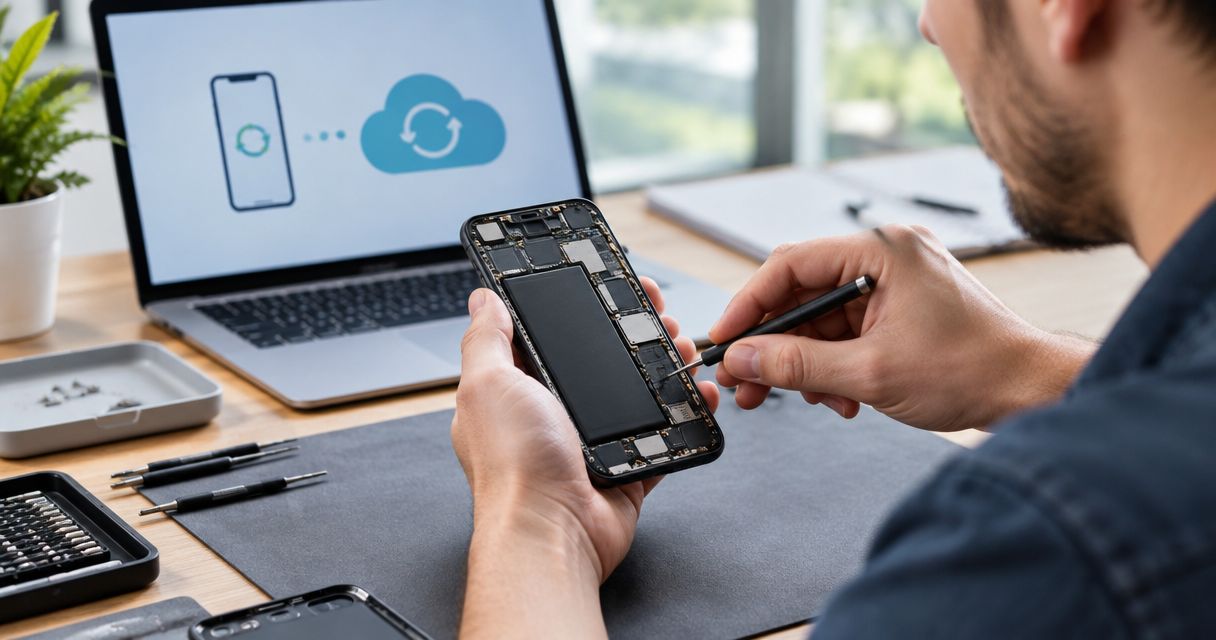
Earpiece hardware replacement does not inherently require erasing your photos. Back up the phone before service and confirm whether any proposed troubleshooting involves a reset.
Can I walk in for earpiece repair in Edmond?
Aspect Phone Solutions provides smartphone repair by appointment for Edmond and the wider Oklahoma City area. Arrange the visit before traveling; prices are confirmed before authorization.
One last thing
A working earpiece does more than produce sound: the phone also needs to route the call there correctly. Before approving a replacement in 2026, ask the technician to reproduce the fault in ordinary call mode. A music test alone is not the same as confirming that you can hear a caller through the receiver.