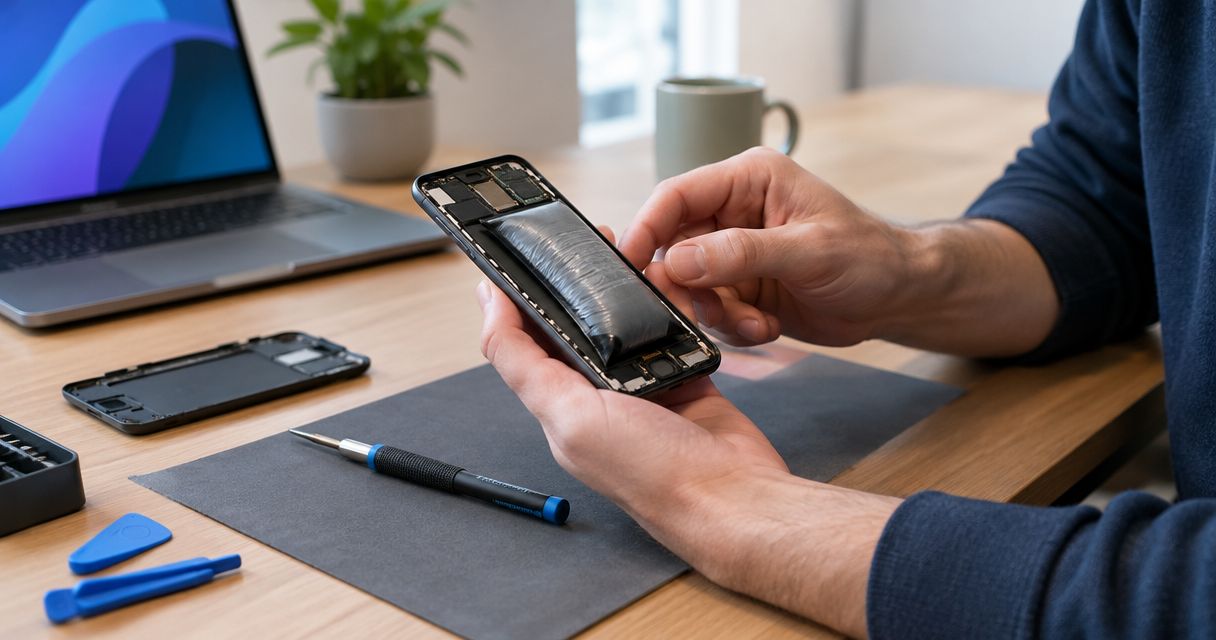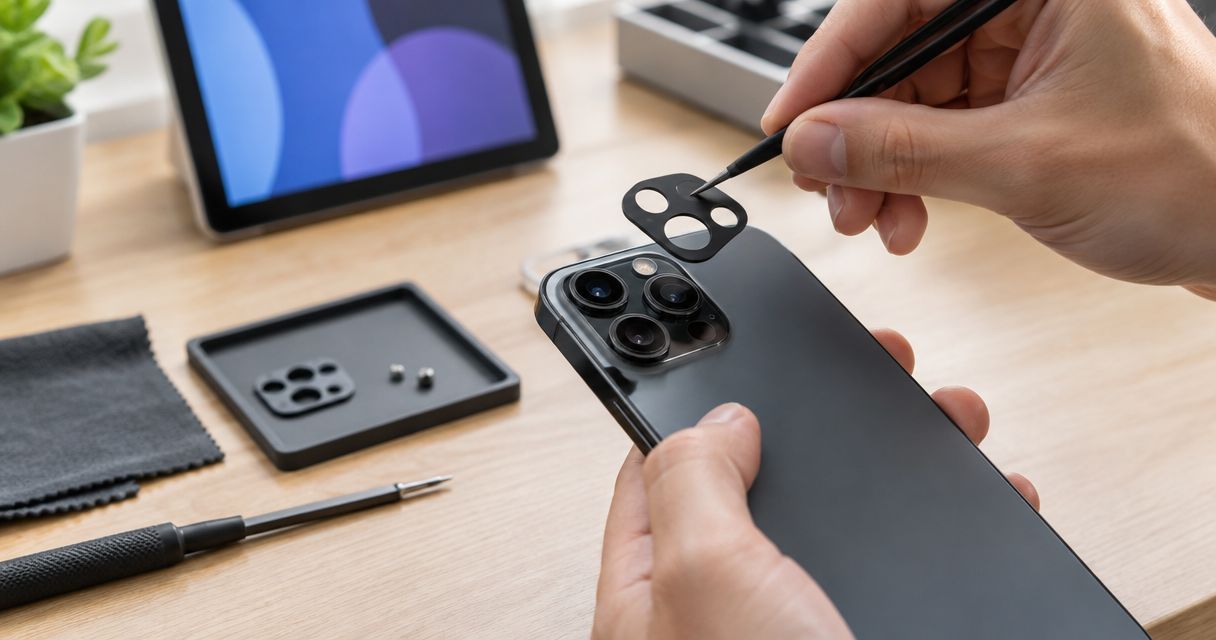
Yes—rear camera glass can be replaced separately when the damage is limited to the outer protective cover, the camera underneath still works, and the phone’s construction supports that repair. Replacing the glass will not fix a damaged camera module, and inspection is needed to distinguish surface damage from an internal fault.
- Can rear camera glass be replaced separately? Yes, when the protective cover is damaged but the camera remains functional.
- Glass replacement protects the camera opening; module replacement addresses a faulty camera assembly.
- Blurry photos alone do not prove that the camera module needs replacement.
- Aspect Phone Solutions suits Edmond and OKC customers seeking appointment-based phone repair.
Can rear camera glass be replaced without replacing the module?
A broken outer camera cover does not automatically mean you need a new camera module. The cover and the camera beneath it serve different purposes. The cover protects the opening; the module contains the components that capture and focus the image.
For an appointment-based inspection in Edmond or the wider Oklahoma City area, Aspect Phone Solutions offers phone repair services. The useful starting point is your exact phone model and what changed after the damage—not simply whether the glass looks cracked.
In 2026, the repair decision still depends on the phone’s construction and the condition of the camera underneath. Use this comparison to understand the possible repair scopes.
| Repair scope | Best for | Main benefit | Limitation |
|---|---|---|---|
| Outer camera glass replacement | A damaged cover over a working camera | Keeps the functioning camera assembly | Does not correct internal camera faults |
| Camera module replacement | A confirmed fault inside the camera assembly | Addresses the defective image-capturing component | Does not by itself repair broken outer glass or a bent camera surround |
| Rear housing or camera-surround repair | Damage affecting the structure around the camera | Addresses the damaged mounting or surrounding structure | Involves more than replacing the protective glass alone |
These are repair categories, not a diagnosis. A phone with broken glass and a damaged camera needs both problems addressed, while an intact camera should not be replaced merely because its cover cracked.
Why this matters
The phrase camera lens repair is ambiguous. Customers often use it for the exposed glass on the back of the phone, while a technician might use it when discussing the optical parts inside the camera.
That difference changes what you authorize. Ask whether the proposed work replaces the outer cover, the camera module, or part of the rear housing. A clear repair description is more useful than a vague promise to fix the lens.
For your 2026 repair decision, focus on the diagnosed damage rather than the most dramatic-looking crack. A shattered cover can sit over a working camera, and an unbroken cover can sit over a faulty one.
When glass-only replacement fits
Glass-only replacement fits when the protective cover is damaged, the camera works correctly, and the surrounding structure can hold the replacement properly. The inspection also needs to account for glass fragments, debris, and any damage beneath the opening.
Normal-looking photos are encouraging, but they are not a complete inspection. A phone can produce an acceptable picture in daylight while showing glare or focus problems in other conditions.
Useful observations to share include:
- Whether photos changed immediately after the drop or impact.
- Whether the problem affects every rear camera view or only a particular view.
- Whether the camera focuses on both nearby and distant subjects.
- Whether bright lights create new streaks, haze, or reflections.
- Whether the cover is cracked, missing, or pushed inward.
Best for: damage confined to the protective cover. The advantage is retaining a functioning camera module. The limitation is that replacing the cover cannot correct an underlying camera fault.
Do not judge the repair solely by whether the new glass looks neat. The camera’s operation after the work matters just as much as the appearance of the cover.
When the camera module needs attention
Camera-module repair or replacement becomes relevant when inspection identifies a fault inside the camera assembly. Persistent inability to focus, an unstable preview, or a missing camera image warrants diagnosis rather than an automatic glass-only repair.
Those symptoms do not identify the failed part by themselves. A camera app problem, a damaged connection, or another phone fault can also interrupt camera operation. The repair scope should follow testing.
A fixed spot in photos also needs investigation. Its cause might be contamination on an exposed surface or damage deeper in the imaging path; replacing an unrelated part will not resolve it.
Best for: a confirmed internal camera fault. Replacing a defective module addresses that component, but it does not solve cracked protective glass, a damaged camera surround, or unrelated phone problems.
If both the cover and module are damaged, ask for a repair description that names both. Do not assume that the words camera replacement include the exterior glass.
When the surrounding housing changes the repair
A camera cover needs a sound place to sit. If the surrounding ring, rear panel, or mounting area is distorted, replacing the glass alone leaves the structural problem unresolved.
Look without pressing on the damaged area. A visible gap, displaced ring, or bent rear panel is information to report—not something to push back into position yourself.
Best for: damage extending beyond the cover. Housing-related work addresses the affected structure, but it is a broader repair than replacing a small piece of glass. The exact phone design determines how those parts are serviced.
A model-specific assessment matters here. Similar-looking phones do not necessarily use the same camera-cover arrangement or repair procedure.
Why the repair scope varies
The answer to “can rear camera glass be replaced separately” depends on more than the crack itself. These factors determine whether a glass-only repair is appropriate:
- Phone construction: The cover’s relationship to the rear panel and camera surround determines the repair approach.
- Camera function: Focus, image capture, and video behavior help establish whether the underlying camera also needs attention.
- Debris exposure: Missing or shattered glass leaves an opening through which contamination can reach the camera area.
- Surrounding damage: A distorted mounting surface changes what must be repaired before the opening can be closed properly.
- Liquid exposure: Moisture introduces a separate concern that a replacement cover alone does not resolve.
- Previous repair work: Existing adhesive, replacement parts, or earlier damage can affect inspection and disassembly.
For a 2026 appointment, provide the full model name rather than just the manufacturer. Also mention previous rear-glass or camera work, even if the phone worked normally afterward.
What can you check safely before an appointment?
You can document the symptoms without opening the phone. Do not remove broken camera glass, probe the opening, or apply liquid cleaner to the damaged area. Stop handling the camera surround if loose fragments are present.
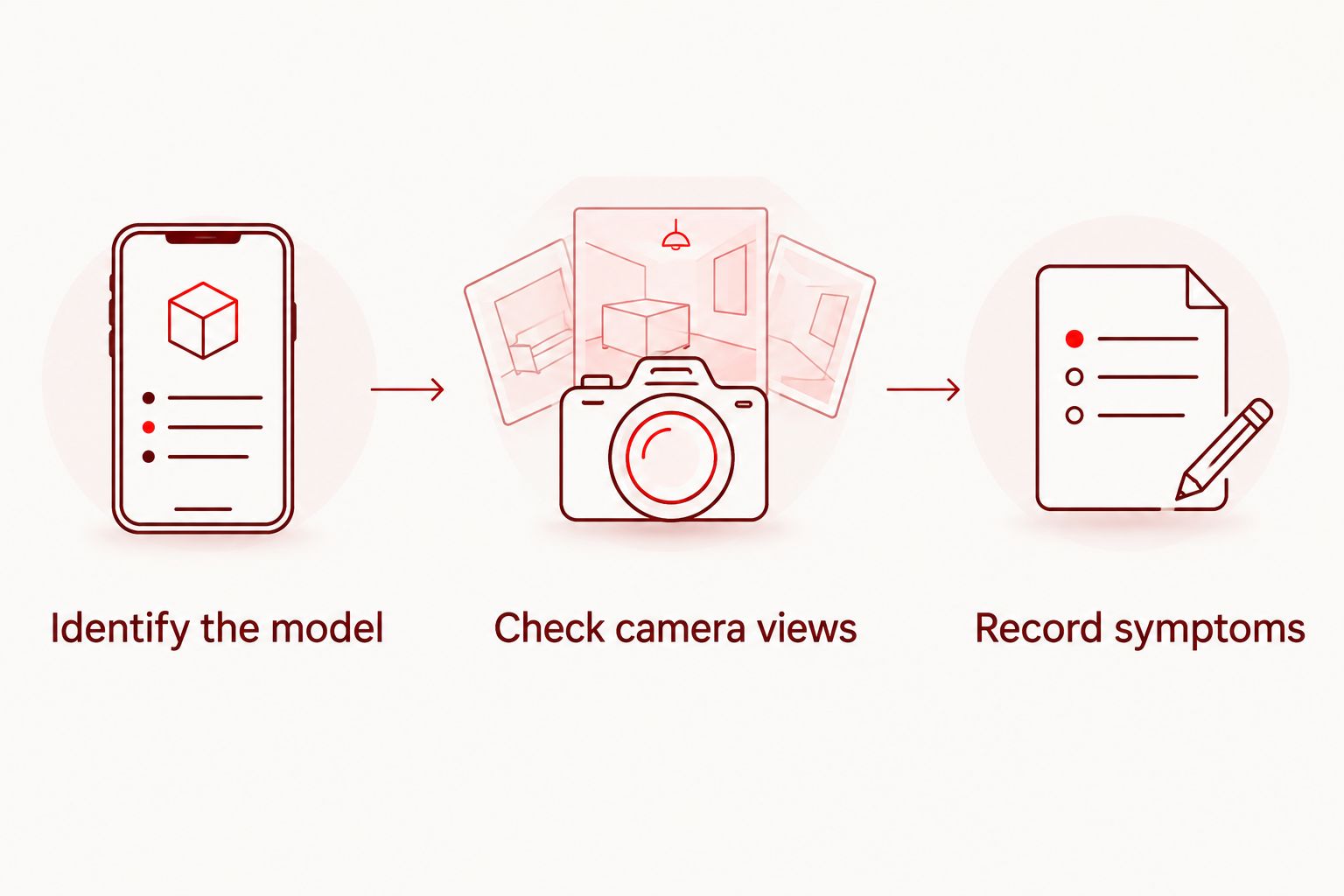
Use these 3 checks to give the repairer useful information:
- Identify the model. Find the full model name in the phone’s settings if the phone is usable. Record when the damage happened and whether there was liquid exposure.
- Check camera views. In good light, select the rear-camera views offered by the camera app. Photograph the same stationary subject and note which view shows the problem.
- Record symptoms. Note blur, glare, dark spots, focus changes, or an absent image. Explain whether the issue appears in still photos, video, or both.
When checking focus, compare a subject at 2 distances: nearby and farther away. Stay within ordinary shooting distances; an object held extremely close can exceed the camera’s normal focusing ability.
These checks help describe the problem; they do not establish the final repair. Different camera views can involve different cameras, digital cropping, or automatic switching, depending on the phone and shooting conditions.
What should you ask before authorizing repair?
Ask for the damaged part to be named in plain language. You should understand why the recommended repair matches the inspection findings before approving it.
For a 2026 repair appointment, use this checklist:
- Is the damage limited to the protective camera glass?
- Does the underlying camera focus and capture images correctly?
- Is there debris or damage beneath the broken cover?
- Is the surrounding housing straight and secure?
- What testing will confirm the repair worked?
- What happens if inspection reveals additional damage?
Aspect Phone Solutions provides appointment-based smartphone repair for Edmond and the wider OKC area, with prices confirmed before authorization. It fits customers who want to arrange a repair visit rather than rely on walk-in service. Confirm the proposed work after inspection instead of treating a symptom description as a final diagnosis.
Arrange a phone repair appointment
Share your phone model and camera symptoms. Service is by appointment.
Will new camera glass fix blurry photos?
New camera glass fixes blur only when the damaged cover is responsible for it. Cracks, scratches, or contamination across the camera’s view can interfere with the image, but a faulty focusing mechanism requires a different repair.
Compare the symptoms before and after the work under similar lighting. If focus or image quality remains wrong, the camera needs further assessment rather than an assumption that any remaining blur is normal.
Can you keep using the phone with broken camera glass?
A working phone is not the same as a protected camera opening. Broken glass presents a handling hazard, and a missing cover exposes the camera area to debris and moisture.
Keep the phone dry, avoid dusty environments, and arrange inspection. Do not push tape, adhesive, or a protective accessory against exposed camera components as a substitute for repair.
What should you check after the repair?
Check the repaired area visually without pressing on it, then open the camera app. Photograph a detailed stationary subject and review the saved image, not just the preview.
Check each selectable rear-camera view individually. Test focus on nearby and distant subjects, then record a short video and check for persistent blur or unexpected image movement.
Your 2026 handover checklist should include:
- A secure-looking cover without an obvious gap or loose fragment.
- Clear saved images under ordinary lighting.
- Working focus at appropriate subject distances.
- No newly introduced obstruction across the camera view.
- An explanation of any remaining symptoms or limitations.
Do not assume that replacing the cover restores the phone’s original water resistance. Ask what sealing work was performed and what limitations apply. Do not test the repair by exposing the phone to water.
FAQ
Can rear camera glass be replaced separately on every phone?
No, separate rear camera glass replacement is not appropriate for every phone or every type of damage. The phone’s construction, camera condition, and surrounding housing determine the repair scope.
Does cracked camera glass mean the camera itself is broken?
No, cracked camera glass does not prove the camera module is broken. The protective cover can crack while the camera underneath continues to function, but inspection is needed to check for hidden damage.
Is rear camera glass the same as the camera lens?
The exposed protective cover is not the same as the optical lens components inside the camera module. Ask which part a repair description refers to, because people often call both the camera lens.
Can dust get into a camera with broken protective glass?
Yes, broken or missing protective glass leaves an opening for dust and debris to enter the camera area. Avoid probing or blowing into the opening, and have the affected area inspected.
Do I need to erase my phone for a camera glass repair?
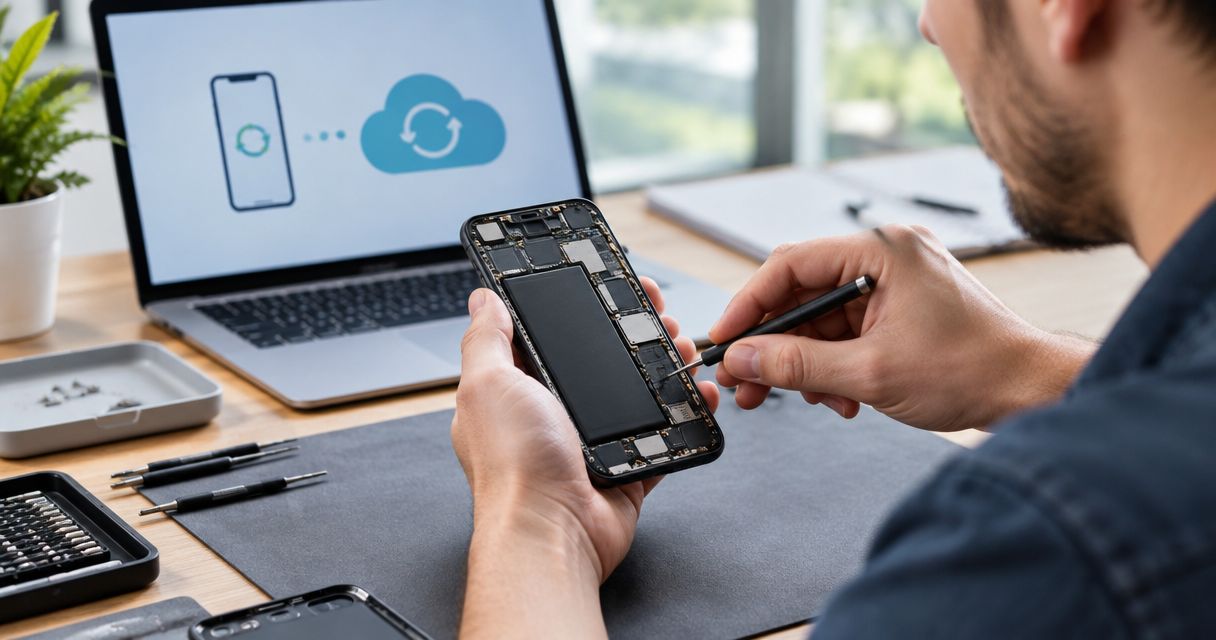
Replacing protective camera glass does not inherently require erasing the phone. Back up your data before service and ask what access is needed for camera testing.
Will replacing camera glass restore water resistance?
Do not assume camera glass replacement restores the phone’s original water resistance. Ask about the sealing work and any limitations, and keep the repaired phone away from water.
Can I walk in for phone repair at Aspect Phone Solutions?
Aspect Phone Solutions provides phone repair by appointment rather than walk-in service. Arrange your visit and describe the phone model, broken glass, and any changes in camera behavior.
One last thing
A visible crack is easier to notice than a focusing fault. Before approving a camera module replacement, ask what test showed the module itself was defective. Before approving glass-only work, ask whether the camera beneath it was checked.
The right repair addresses the damaged parts—not every part near the impact and not just the part you can see.