OEM screen replacement is worth the extra cost when you plan to keep your phone and want to preserve its original display characteristics. For a repair decision in 2026, the caveat is that an OEM label alone does not establish whether the screen is new, refurbished, correctly matched to your model, or installed and configured properly.
- Is OEM screen replacement worth the extra cost? Yes, when preserving original display characteristics matters to you.
- Compare genuine new, refurbished genuine, and aftermarket screens by part condition, display technology, and repair scope.
- A screen label does not replace inspection, clear authorization, or functional testing after repair.
- Aspect Phone Solutions provides appointment-based smartphone repair for Edmond and Oklahoma City customers.
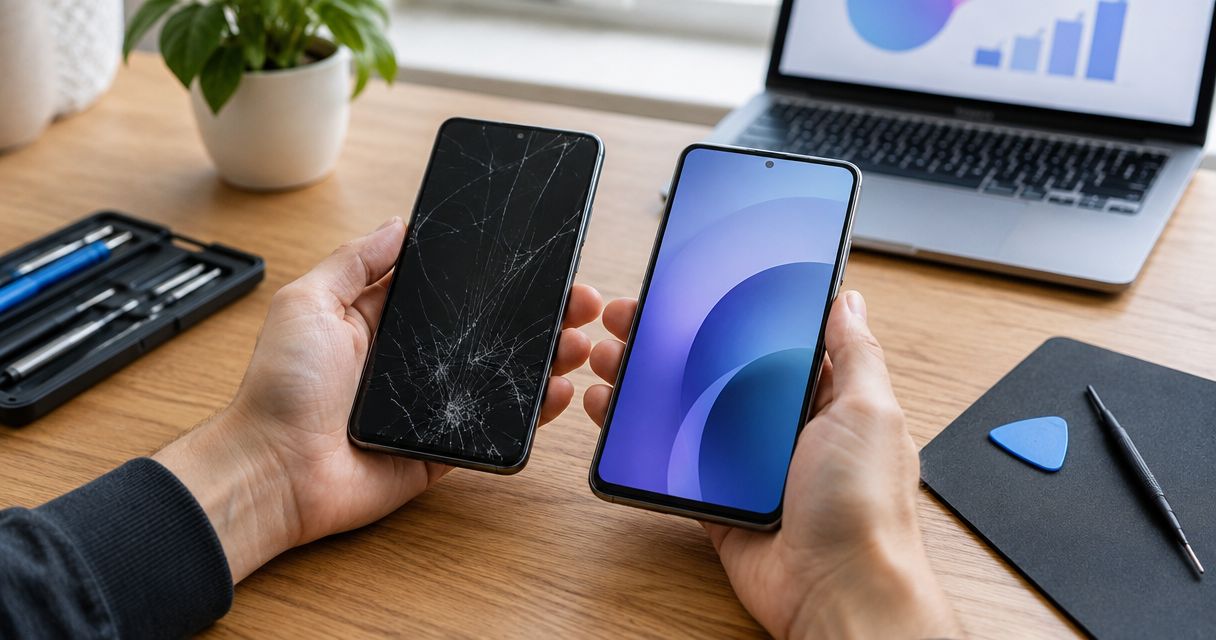
Before choosing a replacement part, decide whether repairing your cracked phone screen makes sense. A premium screen does not address an aging battery, damaged frame, or other separate fault.
Is OEM screen replacement worth the extra cost?
Choose a genuine replacement screen when matching the original display is your priority; consider an aftermarket screen only after understanding its specific differences. Your decision should compare the actual parts offered for your exact phone, not broad labels attached to a repair quote.
These are 3 part categories to distinguish during a screen repair discussion in 2026:
| Screen option | Best for | Main advantage | Main limitation |
|---|---|---|---|
| New genuine screen | Keeping the original display specification | A genuine part specified for the model provides a clear reference for compatibility | Genuine status does not establish installation quality or completion of required setup |
| Refurbished genuine screen | Retaining a genuine display panel | Reuses an original panel after refurbishment | Condition, replaced components, and refurbishment quality need clarification |
| Aftermarket screen | Considering an alternative to a genuine assembly | Provides a non-original replacement option | Display technology, brightness, touch behavior, and fit need part-specific verification |
No category earns an automatic recommendation. A clearly described part with documented limitations gives you a better basis for authorization than an unexplained premium tier.
Why this matters
You look at and touch the screen throughout the day. A replacement that works but differs from the original display can affect the experience you were trying to restore.
Screen repair is also more than replacing broken glass. The visible surface, image-producing panel, touch system, surrounding frame, and nearby components all matter to the diagnosis. Ask what is damaged before deciding which replacement to authorize.
For Edmond and Oklahoma City customers, the practical question is whether the proposed repair restores the functions you need. A clear explanation of the part and repair scope matters more than a reassuring label.
New genuine screens: best for matching the original specification
OEM means original equipment manufacturer. In a repair conversation, however, ask the provider to identify the actual replacement rather than treating OEM as a complete description.
A new genuine assembly is the clearest option when your priority is matching the phone's original display specification. Confirm that the part is intended for your exact model and that the repair includes any manufacturer-required configuration or calibration. Calibration means completing the setup needed for supported components to work as intended.
The limitation is straightforward: a genuine screen is not proof of a complete repair. Installation, connector condition, frame damage, and post-repair testing remain separate concerns.
Ask these questions before agreeing:
- Is the screen new and genuine, or is an original panel being reused?
- What establishes the part's identity and compatibility?
- Does this phone require a setup process after replacement?
- Which display and touch functions will be checked afterward?
Choose this route for its documented specification, not because the word genuine guarantees every outcome. Keep the written part description with your repair record.
Refurbished genuine screens: best for retaining an original panel
A refurbished genuine screen uses an original display panel that has undergone refurbishment. Depending on the assembly, refurbishment can involve replacing damaged glass or other components while retaining the image-producing panel.
That distinction matters. A refurbished assembly is not the same thing as an untouched new genuine assembly, even when the original panel remains inside it.
The advantage is retaining that genuine panel. The limitation is that the label does not explain its previous condition, the refurbishment work, or the condition of every component in the assembly.
Ask what remains original and what was replaced. Also ask whether the screen has visible marks, image retention, color irregularities, or other disclosed limitations. Image retention means a previous image remains visible after the displayed content changes.
Choose a refurbished genuine screen only when its condition and repair coverage are clearly explained. Do not infer condition from the word refurbished alone.
Aftermarket screens: best for evaluating a non-original option
An aftermarket screen is made outside the phone manufacturer's genuine replacement-part supply. The term describes its source; it does not identify a single quality level or technical specification.
The advantage is having another replacement option to consider. The limitation is that you need more detail before deciding whether the offered assembly meets your expectations.
Ask whether the replacement uses the same display technology as the original phone. OLED panels produce light at individual pixels; LCD panels use a backlight. If a proposed repair changes the display technology, you are not comparing equivalent assemblies.
Also ask about brightness control, touch response, viewing angles, and any features affected by the specific replacement. Avoid broad assurances that every aftermarket screen is identical to an original or that every aftermarket screen performs poorly.
Consider an aftermarket screen when its documented compromises fit how you use the phone. If the provider cannot explain the differences for your model, you do not yet have enough information to approve it.
Why the value of an OEM screen varies
The right screen repair decision in 2026 depends on the phone you have and the repair being proposed. Use these factors to judge whether paying extra serves a purpose:
- Exact phone model. Similar-looking phones do not necessarily use interchangeable assemblies. Confirm the full model before comparing options.
- Original display technology. Ask whether the proposed replacement preserves OLED or LCD technology rather than assuming every compatible screen is equivalent.
- Part condition. New genuine, refurbished genuine, and used original parts describe different starting conditions. Get the offered condition in writing.
- Damage beyond the screen. A bent frame, damaged connector, or separate hardware fault changes the repair scope. A screen replacement alone does not resolve unrelated damage.
- Your remaining use. Prioritize original display characteristics if you intend to keep using the phone and care about preserving its familiar appearance and behavior.
- Setup and repair coverage. Ask what configuration, functional checks, and written coverage accompany the installation. Do not assume these from the part label.
Separate facts from preferences. Part identity and condition need confirmation; your tolerance for display differences is a personal decision.
How do you decide before authorizing the repair?
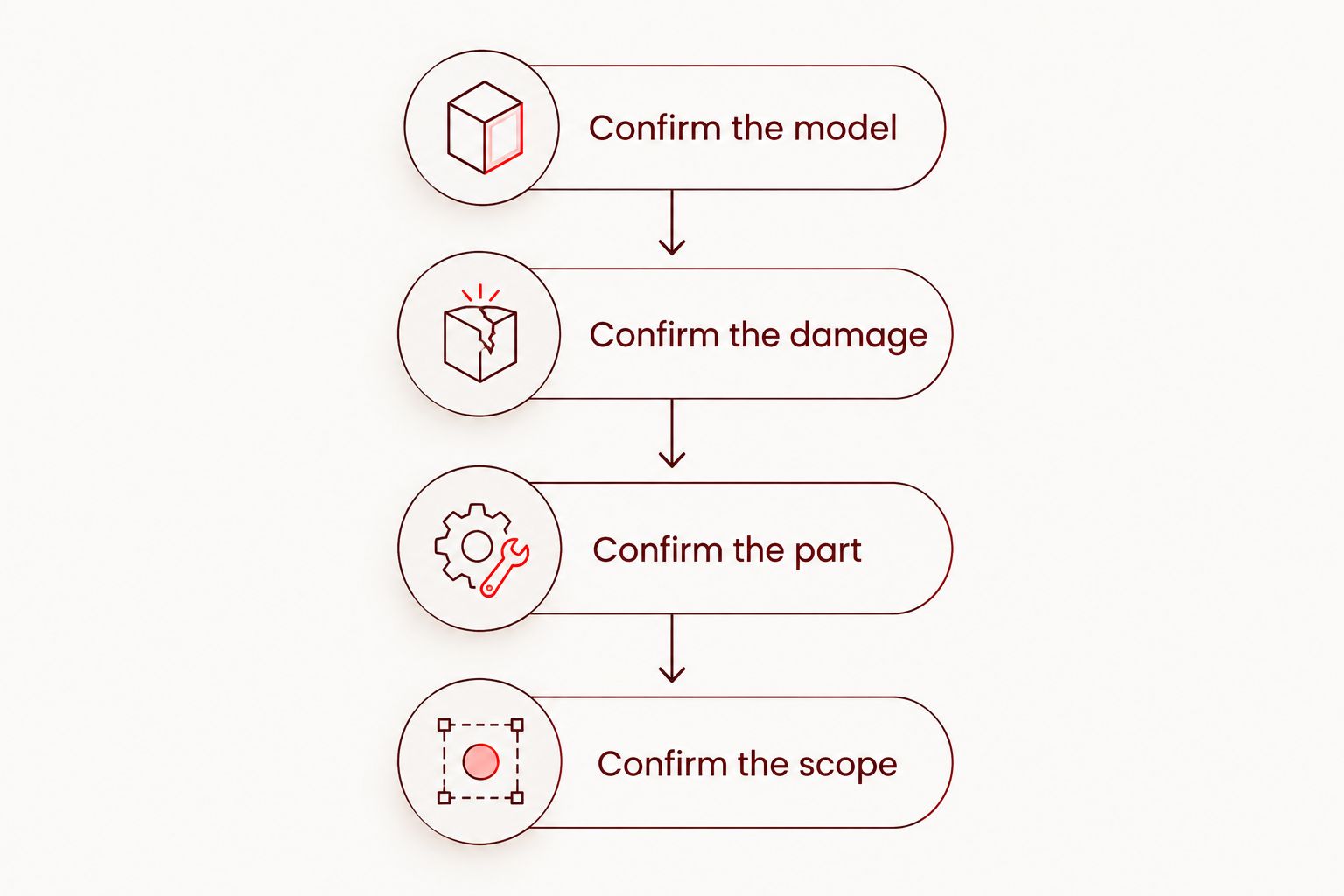
Use these 4 approval checks for a screen repair in 2026. They keep the discussion focused on what you are authorizing rather than on a vague choice between premium and standard.
- Confirm the model. Provide the exact phone model and describe the symptoms: cracked glass, missing image, flickering, unresponsive touch, or another problem. Mention any previous repairs you know about.
- Confirm the damage. Have the phone inspected before treating the screen as the only fault. Tell the technician about drops, liquid exposure, frame damage, and functions that stopped working.
- Confirm the part. Request the replacement's source, condition, display technology, and known limitations. Ask which setup steps apply to your phone.
- Confirm the scope. Review the complete proposed work and confirmed total before authorization. Clarify how any additional findings will be handled before approving more work.
Do not authorize an unspecified substitution. If the proposed part changes after inspection, review the new description before deciding.
For local smartphone repair, Aspect Phone Solutions serves Edmond and the wider Oklahoma City area by appointment rather than walk-in. Prices are confirmed before authorization; arrange an appointment instead of arriving expecting immediate service.
Aspect Phone Solutions is best for Edmond and OKC customers seeking appointment-based smartphone repair. The scheduling limitation matters: this is not a walk-in service, and an appointment does not by itself establish which screen option your phone needs.
Arrange your phone repair appointment
Appointment-based service for Edmond and OKC. Prices are confirmed before authorization.
Does an OEM screen guarantee every feature will work?
An OEM screen does not guarantee every feature will work after replacement. Correct installation, undamaged related components, and any required setup still matter.
Ask specifically about touch input, brightness adjustment, nearby sensors, and biometric features supported by your phone. Do not assume replacing the display also repairs a separate sensor or authentication problem.
Is an aftermarket screen always a bad choice?
An aftermarket screen is not automatically a bad choice. Judge the specific assembly by its documented technology, compatibility, limitations, and the repair terms offered.
The wrong decision is approving an unknown part because its label sounds reassuring. A clear explanation lets you decide whether any differences are acceptable for your use.
Should you choose OEM if you plan to replace the phone soon?
An OEM screen is not automatically the right choice if you plan to replace the phone soon. Compare the complete repair scope with your actual reason for repairing it, such as continued use or preparing it for assessment.
If trade-in is your goal, check the receiving company's current condition requirements before authorizing work. Do not assume a premium screen will increase the accepted value by the amount you spend.
What should you check when collecting the phone?
Use these 5 pickup tests before accepting a screen repair. They are practical checks, not a substitute for the provider's diagnostic process.
- Inspect the fit. Look around the edges for gaps, lifting, uneven seating, or visible damage. Ask about anything that looks different.
- Check the image. Open familiar photos and a plain light-colored screen. Look for lines, dark areas, flickering, and unexpected color differences.
- Test touch input. Type a message, scroll, and use controls near the screen edges. Confirm that the phone responds where you touch.
- Check brightness. Adjust brightness manually and test automatic adjustment if your phone supports it. Raise any unexpected behavior before leaving.
- Test related functions. Check calls, supported biometric functions, and sensors relevant to the repair. Ask which features the technician has already tested.
Do not test water resistance by exposing the repaired phone to water. Ask what was resealed and what, if anything, was tested; a completed screen repair is not a blanket promise about water resistance.
FAQ
Is OEM screen replacement worth the extra cost?
OEM screen replacement is worth the extra cost when preserving the original display characteristics is a priority. Confirm the part's identity, condition, compatibility, and required setup before authorizing the repair.
Does OEM mean the replacement screen is brand-new?
An OEM label alone does not establish that a replacement screen is brand-new. Ask whether the offered assembly is new genuine, refurbished genuine, or a used original part.
Is a refurbished genuine screen the same as a new genuine screen?
A refurbished genuine screen is not the same as a new genuine screen. It retains an original panel that has undergone refurbishment, so ask what was replaced and what condition is being offered.
Will an aftermarket screen look exactly like my original screen?
An aftermarket label does not establish that a screen will look exactly like your original. Ask about display technology, brightness, color, and known differences for the specific replacement.
Does a genuine screen guarantee that face or fingerprint recognition will work?
A genuine screen does not guarantee that face or fingerprint recognition will work after repair. Related hardware condition and model-specific setup requirements also matter.
Should I back up my phone before a screen repair?
Back up your phone before a screen repair if you can safely access it. If screen damage prevents access, discuss that limitation before authorizing work rather than assuming repair guarantees data recovery.
Can I walk into Aspect Phone Solutions for screen repair?
Aspect Phone Solutions provides service by appointment rather than walk-in. It serves customers in Edmond and the wider Oklahoma City area, with prices confirmed before authorization.
One last thing
Ask for the part description on the repair record, not just the word OEM. A record identifying the screen's source, condition, and agreed repair scope gives you something concrete to refer to afterward.
For your 2026 repair decision, approve a defined repair—not a label. The useful question is whether the specified replacement restores the experience you want from the phone you intend to keep.